วิจัยใหม่ชี้ 85% เข้าใจผิดว่า “เบียร์ 0.0%” เป็นเบียร์มีแอลกอฮอล์ ห่วงการตลาดแฝงผ่านบรรจุภัณฑ์ กระตุ้นความสนใจต่อแบรนด์เครื่องดื่มแอลกอฮอล์
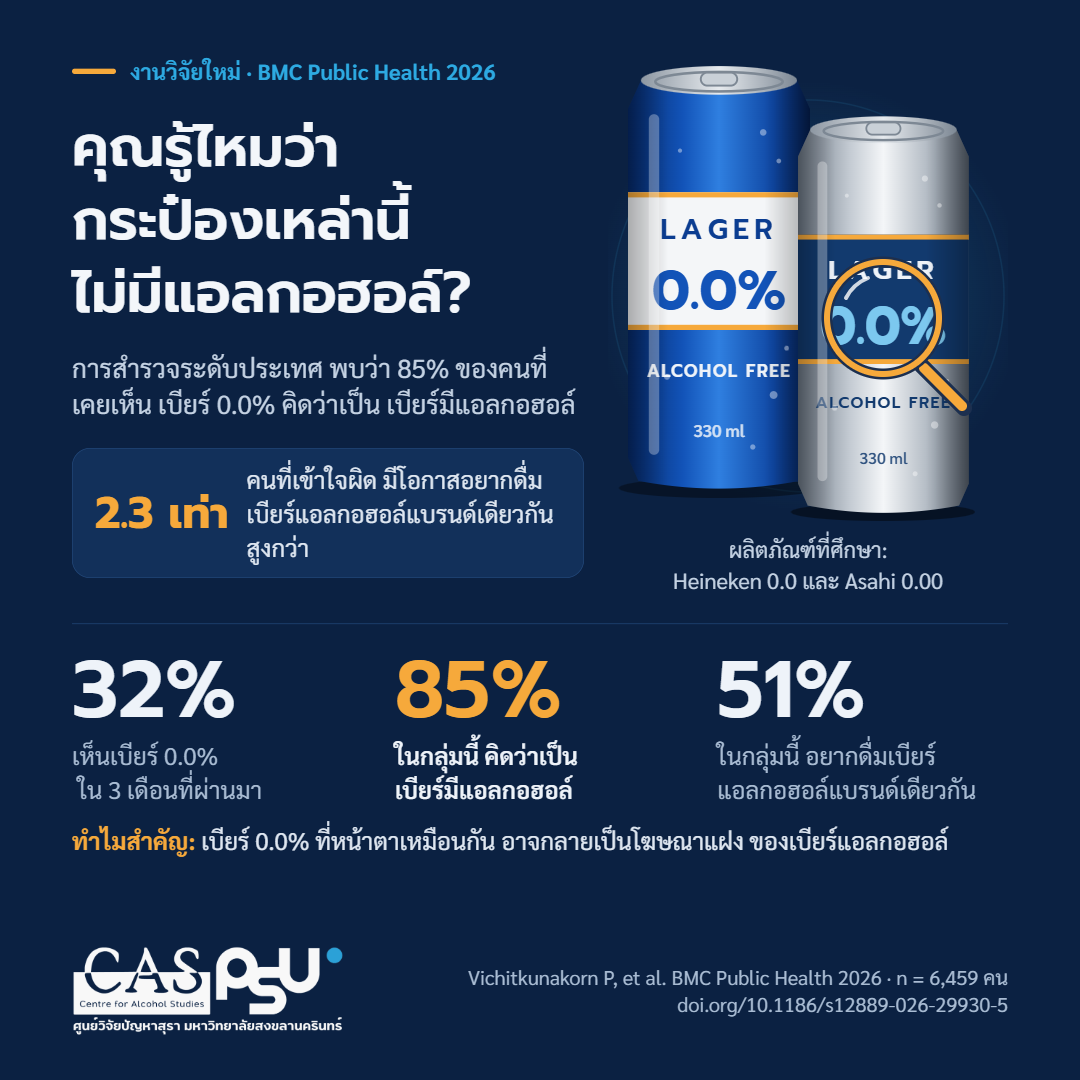
งานวิจัยตีพิมพ์ในวารสาร BMC Public Health ปี 2026 เผยผลสำรวจคนไทย 6,459 คน พบว่า ในกลุ่มผู้ที่เคยเห็นผลิตภัณฑ์เบียร์ไร้แอลกอฮอล์ 85.3% เข้าใจผิดว่าเป็นเบียร์ที่มีแอลกอฮอล์ และ 51.2% รายงานว่ามีความอยากดื่มเบียร์ที่มีแอลกอฮอล์แบรนด์เดียวกัน สะท้อนข้อกังวลเกี่ยวกับการใช้ผลิตภัณฑ์ไร้แอลกอฮอล์เป็นช่องทางการตลาดแฝง (Surrogate Marketing)
ศูนย์วิจัยปัญหาสุรา (ศวส.) ขอแนะนำงานวิจัยเรื่อง “Non-alcoholic (zero-alcohol) beer as surrogate marketing: misidentification and self-reported alcohol desire in a national survey in Thailand” นำโดย ศ.ดร.นพ.พลเทพ วิจิตรคุณากร และคณะ เผยแพร่ในวารสาร BMC Public Health ปี 2026 ซึ่งศึกษาการพบเห็นผลิตภัณฑ์เบียร์ไร้แอลกอฮอล์ การรับรู้ประเภทเครื่องดื่ม และความอยากดื่มเครื่องดื่มแอลกอฮอล์แบรนด์เดียวกันในกลุ่มประชาชนไทย
การศึกษานี้วิเคราะห์ข้อมูลจากการสำรวจระดับประเทศในเดือนธันวาคม 2565 กลุ่มตัวอย่างอายุ 15 ปีขึ้นไป จำนวน 6,459 คน โดยใช้ผลิตภัณฑ์ Heineken 0.0 และ Asahi 0.00 เป็นกรณีศึกษา เนื่องจากมีรูปแบบตราสินค้าและบรรจุภัณฑ์ใกล้เคียงกับผลิตภัณฑ์เบียร์ที่มีแอลกอฮอล์
เปิดผลสำรวจ พบเห็นเบียร์ 0.0% แต่ส่วนใหญ่เข้าใจว่าเป็นเบียร์มีแอลกอฮอล์
ผลการศึกษาพบว่า
-
32.2% ของกลุ่มตัวอย่างเคยเห็นผลิตภัณฑ์เบียร์ไร้แอลกอฮอล์อย่างน้อยหนึ่งแบรนด์ในช่วง 3 เดือนที่ผ่านมา
-
85.3% ของผู้ที่เคยเห็นผลิตภัณฑ์ เข้าใจผิดว่าผลิตภัณฑ์อย่างน้อยหนึ่งรายการเป็นเบียร์ที่มีแอลกอฮอล์
-
51.2% ของผู้ที่เคยเห็นผลิตภัณฑ์ รายงานว่ามีความอยากดื่มเบียร์ที่มีแอลกอฮอล์แบรนด์เดียวกันอย่างน้อยหนึ่งแบรนด์ในระดับใดระดับหนึ่ง
นอกจากนี้ ผลการวิเคราะห์ยังพบว่า ผู้ที่เข้าใจผิดว่าเบียร์ไร้แอลกอฮอล์เป็นเบียร์ที่มีแอลกอฮอล์ มีค่าอัตราส่วนโอกาสที่จะรายงานความอยากดื่มในระดับสูงกว่าเป็น 2.31 เท่า เมื่อเทียบกับผู้ที่ไม่ได้เข้าใจผิด หลังปรับปัจจัยอื่นที่เกี่ยวข้องแล้ว
อย่างไรก็ตาม เมื่อวิเคราะห์แยกตามผลิตภัณฑ์ พบความสัมพันธ์ดังกล่าวในกรณี Heineken 0.0 แต่ไม่พบความสัมพันธ์ที่ชัดเจนในกรณี Asahi 0.00 จึงไม่อาจสรุปว่าผลิตภัณฑ์เบียร์ไร้แอลกอฮอล์ทุกแบรนด์มีความสัมพันธ์กับความอยากดื่มในลักษณะเดียวกัน
เบียร์ไร้แอลกอฮอล์ อาจเป็นช่องทางการตลาดแฝง?
ประเด็นสำคัญที่งานวิจัยหยิบยกขึ้นมาคือ การตลาดแฝง (Surrogate Marketing) หรือการใช้ผลิตภัณฑ์ประเภทอื่นที่มีชื่อแบรนด์ โลโก้ สีสัน และรูปแบบบรรจุภัณฑ์คล้ายคลึงกับเครื่องดื่มแอลกอฮอล์ เพื่อสร้างการรับรู้และเชื่อมโยงไปยังแบรนด์เครื่องดื่มแอลกอฮอล์
แม้ผลิตภัณฑ์เบียร์ 0.0% จะไม่มีแอลกอฮอล์ตามที่ระบุบนฉลาก แต่หากผู้บริโภคจำนวนมากไม่สามารถแยกแยะผลิตภัณฑ์จากรูปลักษณ์ภายนอกได้ ก็อาจเกิดข้อกังวลว่าการสื่อสารการตลาดของผลิตภัณฑ์ดังกล่าวจะช่วยสร้างการจดจำแบรนด์เครื่องดื่มแอลกอฮอล์ไปพร้อมกัน
ผู้วิจัยเสนอให้พิจารณามาตรการกำกับดูแลด้านฉลาก บรรจุภัณฑ์ และการตลาดของเครื่องดื่มไร้แอลกอฮอล์ โดยให้มีความแตกต่างจากผลิตภัณฑ์ที่มีแอลกอฮอล์อย่างชัดเจน เพื่อลดโอกาสเกิดความเข้าใจผิดและความเสี่ยงจากการตลาดแฝง โดยเฉพาะในกลุ่มเปราะบาง
ทั้งนี้ งานวิจัยเป็นการศึกษาแบบภาคตัดขวาง (Cross-sectional Study) จึงแสดงได้เพียงความสัมพันธ์ระหว่างการเข้าใจผิดกับระดับความอยากดื่มที่รายงาน ไม่สามารถยืนยันได้ว่าการเห็นเบียร์ไร้แอลกอฮอล์เป็นสาเหตุทำให้เกิดความอยากดื่ม หรือทำให้กลับไปดื่มแอลกอฮอล์
อ่านงานวิจัยฉบับเต็ม
Vichitkunakorn P, et al. (2026). Non-alcoholic (zero-alcohol) beer as surrogate marketing: misidentification and self-reported alcohol desire in a national survey in Thailand. BMC Public Health.
https://doi.org/10.1186/s12889-026-29930-5
New Study: 85% Mistook Zero-Alcohol Beer for Alcoholic Beer, Raising Concerns About Surrogate Marketing
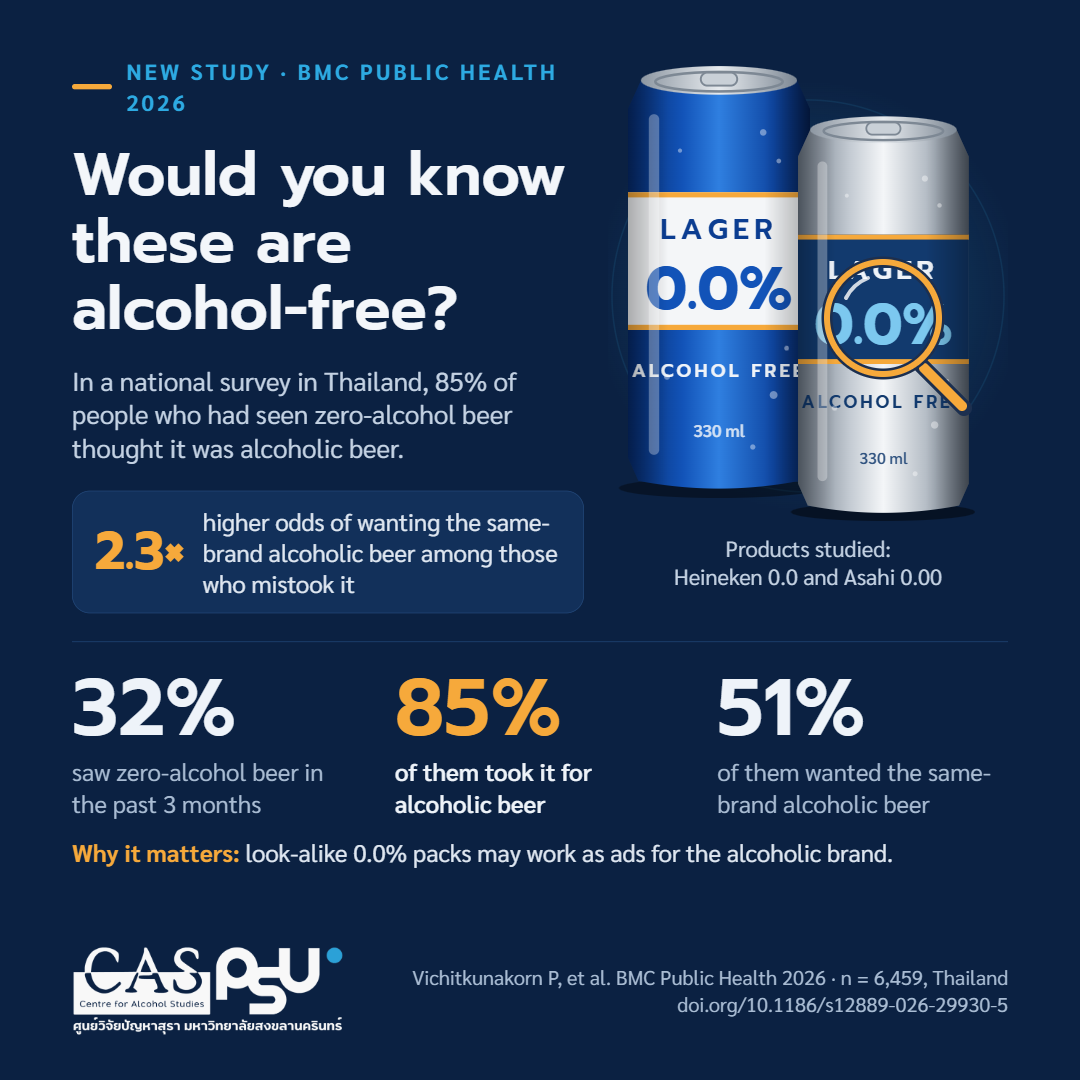
A new study published in BMC Public Health (2026) found that 85.3% of participants who had seen zero-alcohol beer products mistakenly identified at least one as alcoholic beer, while 51.2% reported some desire to drink alcoholic beer from the same brand. The findings raise concerns about the potential role of zero-alcohol products in surrogate marketing.
The Centre for Alcohol Studies (CAS), Faculty of Medicine, Prince of Songkla University, highlights a new study titled “Non-alcoholic (zero-alcohol) beer as surrogate marketing: misidentification and self-reported alcohol desire in a national survey in Thailand.”
Led by Professor Polathep Vichitkunakorn and colleagues, the study was published in BMC Public Health in 2026. It examined exposure to zero-alcohol beer products, consumer misidentification, and self-reported desire to drink alcoholic beverages of the corresponding brands.
The researchers conducted a secondary analysis of a national survey involving 6,459 Thai residents aged 15 years and older, conducted in December 2022. The study focused on two zero-alcohol beer products, Heineken 0.0 and Asahi 0.00, whose branding and packaging closely resemble their alcoholic counterparts.
Key Findings: Most Exposed Participants Mistook Zero-Alcohol Beer for Alcoholic Beer
The study revealed three key findings:
-
32.2% of participants reported seeing at least one zero-alcohol beer product within the previous three months.
-
85.3% of those exposed mistakenly identified at least one product as alcoholic beer.
-
51.2% of those exposed reported some degree of desire to drink alcoholic beer from at least one corresponding brand.
Importantly, participants who misidentified zero-alcohol beer as alcoholic beer had 2.31 times the adjusted odds of reporting a higher level of desire to drink alcoholic beer compared with those who correctly distinguished the products.
However, product-specific analyses showed that this association was observed for Heineken 0.0 but not for Asahi 0.00, suggesting that the findings may not apply equally to all zero-alcohol beer products.
Could Zero-Alcohol Beer Serve as Surrogate Marketing?
One of the key concerns highlighted by the study is surrogate marketing, a practice in which non-alcoholic products may indirectly promote alcoholic beverages through shared brand names, logos, colours, and packaging designs.
Although zero-alcohol beer products contain no or negligible alcohol, their visual similarity to alcoholic beverages may make it difficult for consumers to distinguish between the two.
The findings raise concerns that zero-alcohol products could potentially reinforce recognition of alcoholic beverage brands, even when the products themselves are marketed as alcohol-free.
Implications for Alcohol Marketing Regulations
The researchers highlight the importance of considering clearer labelling, packaging, and marketing regulations to ensure that zero-alcohol beverages are visually distinguishable from their alcoholic counterparts.
Such measures could help reduce consumer confusion and address potential risks associated with surrogate marketing, particularly among vulnerable populations.
Nevertheless, the researchers emphasise that the study used a cross-sectional design. Therefore, the findings demonstrate associations rather than causation and do not establish that exposure to zero-alcohol beer increases alcohol craving, drinking behaviour, or relapse risk.
The study contributes important evidence to ongoing discussions about alcohol marketing regulation and the public health implications of zero-alcohol beverage branding in Thailand.
Read the Full Research Article
Title: Non-alcoholic (zero-alcohol) beer as surrogate marketing: misidentification and self-reported alcohol desire in a national survey in Thailand
Authors: Vichitkunakorn P, et al.
Journal: BMC Public Health (2026)
DOI: https://doi.org/10.1186/s12889-026-29930-5