คำค้นหา : การบริโภคเครื่องดื่มแอลกอฮอล์

คำค้นหา : การบริโภคเครื่องดื่มแอลกอฮอล์

คำนี้ค้นหามาแล้ว : 2090 ครั้ง
ภาระโรคตับจากแอลกอฮอล์ในเอเชีย กับความท้าทายของระบบสุขภาพและนโยบายสาธารณะ
https://cas.or.th/content?id=1151
Tags : -

ศูนย์วิจัยปัญหาสุรา (ศวส.) ร่วมเผยแพร่บทวิชาการระดับนานาชาติ ชี้เอเชียเผชิญภาระโรคตับจากแอลกอฮอล์สูง เสนอเสริมมาตรการควบคุมและระบบบริการสุขภาพ

ศูนย์วิจัยปัญหาสุรา (ศวส.) มหาวิทยาลัยสงขลานครินทร์ ร่วมเผยแพร่ผลงานวิชาการระดับนานาชาติ เรื่อง “Burden of Alcohol-Associated Liver Disease in Asia: Implications for Health Systems and Public Health Policy” หรือ “ภาระโรคตับจากแอลกอฮอล์ในเอเชีย กับความท้าทายของระบบสุขภาพและนโยบายสาธารณะ” ซึ่งเป็นบทหนึ่งในหนังสือ Handbook of Alcohol Use and Alcohol Use Disorders จัดพิมพ์โดยสำนักพิมพ์ Springer Nature ในปี พ.ศ. 2569

บทวิชาการดังกล่าวมี ศ.ดร.นพ.พลเทพ วิจิตรคุณากร ผู้อำนวยการศูนย์วิจัยปัญหาสุรา คณะแพทยศาสตร์ มหาวิทยาลัยสงขลานครินทร์ เป็นหนึ่งในผู้เขียนหลัก ร่วมกับคณะนักวิชาการจากสถาบันการศึกษาและหน่วยงานทางการแพทย์ทั้งในประเทศไทยและต่างประเทศ ได้แก่  ผศ.นพ.ชิตชัย รัตนนุกรม, นพ.ภสกรณ์ ด่านพาณิชย์กุล, นพ.สุทัศน์ เลี้ยงพันธุ์สกุล และ รศ.นพ.อภิชาติ แก้วเดช

บทวิชาการนี้รวบรวมและสังเคราะห์หลักฐานทางวิชาการเกี่ยวกับภาระโรคและผลกระทบจากการบริโภคเครื่องดื่มแอลกอฮอล์ในภูมิภาคเอเชีย โดยเฉพาะโรคตับที่สัมพันธ์กับแอลกอฮอล์ (Alcohol-Associated Liver Disease: ALD) ซึ่งเป็นปัญหาสาธารณสุขสำคัญที่ส่งผลต่อการเจ็บป่วย การเสียชีวิตก่อนวัยอันควร ตลอดจนภาระค่าใช้จ่ายของระบบสุขภาพและเศรษฐกิจ

ประเด็นสำคัญจากบทวิชาการ

ข้อมูลที่นำมาทบทวนระบุว่า ในปี พ.ศ. 2564 ภูมิภาคเอเชียมีสัดส่วนการเสียชีวิตจากโรคตับที่สัมพันธ์กับแอลกอฮอล์สูงถึง ร้อยละ 49.5 ของการเสียชีวิตจากโรคดังกล่าวทั่วโลก โดยเอเชียใต้มีจำนวนผู้เสียชีวิตสูงที่สุด ขณะที่เอเชียกลางมีอัตราการเสียชีวิตปรับมาตรฐานตามอายุสูงที่สุด

นอกจากนี้ การบริโภคแอลกอฮอล์ยังเพิ่มความเสี่ยงต่อการเกิดโรคตับหลายระยะ ตั้งแต่ภาวะไขมันสะสมในตับ ตับอักเสบ ตับแข็ง ไปจนถึงมะเร็งตับ โดยความเสี่ยงอาจเพิ่มสูงขึ้นเมื่อมีปัจจัยร่วม เช่น การติดเชื้อไวรัสตับอักเสบบีและซี รวมถึงความผิดปกติทางเมตาบอลิซึม

ผลกระทบดังกล่าวไม่ได้จำกัดอยู่เพียงสุขภาพของผู้ดื่ม แต่ยังสร้างภาระต่อระบบบริการสุขภาพ ทั้งการเข้ารับการรักษาในโรงพยาบาลซ้ำ การใช้บริการหอผู้ป่วยวิกฤต และความจำเป็นในการรักษาระยะยาว รวมถึงการสูญเสียผลิตภาพแรงงานและรายได้ของครัวเรือน

ข้อเสนอเชิงนโยบาย: ป้องกันระดับประชากร ควบคู่กับการพัฒนาระบบรักษา

บทวิชาการเน้นย้ำถึงความจำเป็นในการดำเนินมาตรการควบคุมเครื่องดื่มแอลกอฮอล์ที่มีหลักฐานรองรับ โดยเฉพาะการเพิ่มภาษีสรรพสามิต การจำกัดการเข้าถึงเครื่องดื่มแอลกอฮอล์ และการควบคุมการโฆษณา การส่งเสริมการขาย และการสนับสนุนกิจกรรมทางการตลาด

ขณะเดียวกัน ควรพัฒนาระบบบริการสุขภาพให้สามารถคัดกรองผู้มีพฤติกรรมดื่มเสี่ยง ให้คำปรึกษาและบำบัดรักษาได้ตั้งแต่ระยะเริ่มต้น รวมถึงบูรณาการบริการดูแลผู้มีภาวะผิดปกติจากการใช้แอลกอฮอล์เข้ากับระบบบริการสุขภาพอย่างต่อเนื่อง

การเผยแพร่บทวิชาการครั้งนี้สะท้อนถึงความสำคัญของการนำองค์ความรู้และหลักฐานเชิงประจักษ์มาใช้สนับสนุนการพัฒนานโยบายสาธารณสุข เพื่อป้องกันและลดผลกระทบจากการบริโภคเครื่องดื่มแอลกอฮอล์ ตลอดจนเสริมสร้างความเข้มแข็งของระบบสุขภาพในประเทศไทยและภูมิภาคเอเชีย

รายละเอียดบทวิชาการ

  • ชื่อเรื่อง: Burden of Alcohol-Associated Liver Disease in Asia: Implications for Health Systems and Public Health Policy

  • ผู้เขียน: Polathep Vichitkunakorn, Chitchai Rattananukrom, Pojsakorn Danpanichkul, Suthat Liangpunsakul และ Apichat Kaewdech

  • หนังสือ: Handbook of Alcohol Use and Alcohol Use Disorders

  • สำนักพิมพ์: Springer Nature

  • ปีที่เผยแพร่: 2026

  • DOI: https://doi.org/10.1007/978-3-031-35658-2_1-1

อ่านบทวิชาการเพิ่มเติม: https://doi.org/10.1007/978-3-031-35658-2_1-1


Centre for Alcohol Studies (CAS) Co-Authors International Book Chapter Highlighting the Growing Burden of Alcohol-Associated Liver Disease in Asia

The Centre for Alcohol Studies (CAS), Prince of Songkla University, has contributed to an international academic publication entitled “Burden of Alcohol-Associated Liver Disease in Asia: Implications for Health Systems and Public Health Policy”, a book chapter published in the Handbook of Alcohol Use and Alcohol Use Disorders by Springer Nature in 2026.

The chapter is co-authored by Prof. Polathep Vichitkunakorn, M.D., Ph.D., Director of the Centre for Alcohol Studies, Faculty of Medicine, Prince of Songkla University, together with Chitchai Rattananukrom, Pojsakorn Danpanichkul, Suthat Liangpunsakul, and Apichat Kaewdech.

This comprehensive narrative review examines the growing burden of alcohol-related diseases across Asia, with particular emphasis on alcohol-associated liver disease (ALD), its implications for healthcare systems, and evidence-based public health policy responses.

Key Findings

The chapter highlights that Asia accounted for approximately 49.5% of global deaths from alcohol-associated liver disease in 2021, reflecting a disproportionately high disease burden despite generally lower per capita alcohol consumption than in Western regions.

Alcohol-associated liver disease encompasses a spectrum of conditions, ranging from hepatic steatosis and alcohol-associated hepatitis to cirrhosis and liver cancer. The review also emphasizes the increased risk of liver disease progression when alcohol consumption coexists with viral hepatitis or metabolic dysfunction.

Beyond individual health consequences, alcohol-related diseases place substantial pressure on healthcare systems through increased hospital admissions, intensive care utilization, recurrent hospitalizations, and long-term treatment needs. These conditions also contribute to significant economic losses through healthcare expenditures and reduced workforce productivity.

Policy Implications and Public Health Recommendations

The authors emphasize the importance of strengthening evidence-based alcohol control policies, including increasing alcohol excise taxes, restricting alcohol availability, and regulating alcohol advertising, promotion, and sponsorship.

The chapter also calls for stronger healthcare system responses through early identification of hazardous drinking, screening and brief interventions, and improved access to treatment for alcohol use disorders.

An integrated approach combining population-level prevention with accessible healthcare services is essential to reducing alcohol-related harm and strengthening health systems across Asia.

This publication contributes to the growing body of scientific evidence supporting effective alcohol control policies and public health interventions in Thailand and throughout the Asian region.

Publication Details

  • Title: Burden of Alcohol-Associated Liver Disease in Asia: Implications for Health Systems and Public Health Policy

  • Authors: Polathep Vichitkunakorn, Chitchai Rattananukrom, Pojsakorn Danpanichkul, Suthat Liangpunsakul, and Apichat Kaewdech

  • Book: Handbook of Alcohol Use and Alcohol Use Disorders

  • Publisher: Springer Nature

  • Publication Year: 2026

  • DOI: https://doi.org/10.1007/978-3-031-35658-2_1-1

Read the publication: https://doi.org/10.1007/978-3-031-35658-2_1-1

เงินภาษี 2% คุ้มค่าแค่ไหน? สสส. กับผลลัพธ์ 25 ปีของการควบคุมเครื่องดื่มแอลกอฮอล์ในประเทศไทย
https://cas.or.th/content?id=1149
Tags : -

เงินภาษี 2% คุ้มค่าแค่ไหน? สสส. กับผลลัพธ์ 25 ปีของการควบคุมเครื่องดื่มแอลกอฮอล์ในประเทศไทย

เงินภาษี 2% ที่จัดสรรให้สำนักงานกองทุนสนับสนุนการสร้างเสริมสุขภาพ (สสส.) ไม่ได้เป็นเพียงงบประมาณสำหรับการรณรงค์ แต่เป็นการลงทุนเพื่อพัฒนาระบบสุขภาพ สร้างองค์ความรู้ สนับสนุนมาตรการทางกฎหมายและนโยบาย ตลอดจนขับเคลื่อนความร่วมมือจากทุกภาคส่วน เพื่อป้องกันและลดผลกระทบจากการบริโภคเครื่องดื่มแอลกอฮอล์ในประเทศไทย

ตลอด 25 ปีที่ผ่านมา การดำเนินงานด้านการควบคุมเครื่องดื่มแอลกอฮอล์ครอบคลุมตั้งแต่การสร้างความตระหนักรู้ในสังคม การรณรงค์ลด ละ เลิกดื่ม การพัฒนาระบบดูแลผู้มีปัญหาการดื่ม การผลักดันกฎหมาย ไปจนถึงการสร้างหลักฐานเชิงประจักษ์เพื่อสนับสนุนการตัดสินใจเชิงนโยบายและความร่วมมือระดับนานาชาติ


1. ผลประเมินแผนควบคุมแอลกอฮอล์ พ.ศ. 2561–2565

ผลการประเมินแผนควบคุมเครื่องดื่มแอลกอฮอล์ พ.ศ. 2561–2565 สะท้อนผลประโยชน์ทางเศรษฐศาสตร์และความก้าวหน้าของตัวชี้วัดที่เกี่ยวข้องกับการดำเนินงาน

  • ผลประโยชน์ทางเศรษฐศาสตร์: เงินลงทุน สสส. 1,540 ล้านบาท ได้รับผลประโยชน์ทางเศรษฐศาสตร์ 9,444 ล้านบาท

  • อัตราผลประโยชน์ต่อเงินลงทุน: เงินลงทุน 1 บาท สร้างผลประโยชน์ที่ประเมินได้ 6.13 บาท

  • ตัวชี้วัดที่มีผลการดำเนินงานดีขึ้น: 32 จาก 41 ตัว หรือร้อยละ 78

ผลประโยชน์ที่ประเมินได้จำแนกตามประเภท

  • การลดการดื่มเครื่องดื่มแอลกอฮอล์: 6,133 ล้านบาท หรือร้อยละ 64.9

  • การลดอุบัติเหตุ: 2,519 ล้านบาท

  • การลดโรคและความรุนแรง: 651 ล้านบาท

  • งานประเพณีและพื้นที่ปลอดเหล้า: 141 ล้านบาท

หมายเหตุ: ตัวเลขผลประโยชน์เป็นการประเมินทางเศรษฐศาสตร์ ไม่ใช่เงินสดที่รัฐได้รับคืนโดยตรง


2. สสส. นำเงิน 2% ไปทำอะไรบ้าง? 5 กลยุทธ์หลักตลอด 25 ปี

2.1 รณรงค์ให้คนลด ละ เลิกดื่ม

การรณรงค์งดเหล้าเข้าพรรษาเป็นหนึ่งในกลไกสำคัญที่ส่งเสริมการปรับเปลี่ยนพฤติกรรมการบริโภคเครื่องดื่มแอลกอฮอล์ในระดับประชากร

ผลการศึกษาพบว่า ปริมาณการบริโภคแอลกอฮอล์ลดลงประมาณร้อยละ 10 ในช่วงรณรงค์ เมื่อเปรียบเทียบกับแนวโน้มตามปกติ ขณะที่ข้อมูลปี พ.ศ. 2568 ระบุว่ามีผู้ร่วมงดตลอดช่วงเข้าพรรษา 8.6 ล้านคน โดยมีผู้ที่งดตลอดช่วงเข้าพรรษา 4.5 ล้านคน และครัวเรือนประหยัดค่าใช้จ่ายได้ประมาณ 14,949 ล้านบาทในช่วง 3 เดือน

นอกจากนี้ ค่านิยมการให้เครื่องดื่มแอลกอฮอล์เป็นของขวัญลดลงจากร้อยละ 30.2 เหลือร้อยละ 9 ภายหลังการรณรงค์ “ให้เหล้าเท่ากับแช่ง” ในช่วง พ.ศ. 2551–2560

2.2 สร้างระบบช่วยเหลือผู้มีปัญหาการดื่ม

การควบคุมเครื่องดื่มแอลกอฮอล์ไม่ได้จำกัดอยู่ที่การป้องกันและการรณรงค์เท่านั้น แต่ยังครอบคลุมการพัฒนาระบบบริการสุขภาพเพื่อช่วยเหลือผู้มีปัญหาการดื่มอย่างต่อเนื่อง

การดำเนินงานประกอบด้วยการสนับสนุนแผนงานพัฒนาระบบการดูแลผู้มีปัญหาการดื่มสุรา (ผรส.) การพัฒนาระบบบริการตั้งแต่โรงพยาบาลส่งเสริมสุขภาพตำบลจนถึงโรงพยาบาลระดับตติยภูมิ การสนับสนุนการคัดกรองปัญหาการดื่ม ตลอดจนการพัฒนาศักยภาพบุคลากรสาธารณสุขและแนวปฏิบัติที่เกี่ยวข้อง

จำนวนผู้ได้รับการคัดกรอง 262,355 คน และการคัดกรองในกลุ่มต่าง ๆ จำนวน 10.3 ล้านคนในปี พ.ศ. 2562

2.3 ผลักดันกฎหมายและนโยบาย

สสส. มีบทบาทสนับสนุนการขับเคลื่อนนโยบายควบคุมเครื่องดื่มแอลกอฮอล์ผ่านความร่วมมือของภาครัฐ ภาควิชาการ ภาคประชาสังคม และเครือข่ายที่เกี่ยวข้อง โดยใช้แนวคิด “สามเหลี่ยมเขยื้อนภูเขา” เป็นกรอบหนึ่งในการเชื่อมโยงพลังจากหลายภาคส่วน

การดำเนินงานครอบคลุมการสนับสนุนการพัฒนากฎหมาย การเสริมศักยภาพหน่วยงานที่เกี่ยวข้อง และการสร้างหลักฐานเชิงประจักษ์เพื่อประเมินมาตรการควบคุม เช่น มาตรการภาษีและการกำหนดเวลาจำหน่ายเครื่องดื่มแอลกอฮอล์ ข้อมูลเหล่านี้มีความสำคัญต่อการพิจารณาทางเลือกเชิงนโยบายที่คำนึงถึงผลกระทบต่อสุขภาพและสังคม

2.4 สร้างหลักฐานและองค์ความรู้

การวิจัยและข้อมูลที่มีคุณภาพเป็นรากฐานสำคัญของการกำหนดนโยบายควบคุมเครื่องดื่มแอลกอฮอล์ สสส. สนับสนุนการพัฒนาองค์ความรู้ผ่านหน่วยงานวิจัยและเครือข่ายวิชาการ รวมถึงศูนย์วิจัยปัญหาสุรา (ศวส.)

การดำเนินงานครอบคลุมการศึกษาสถานการณ์การบริโภคเครื่องดื่มแอลกอฮอล์ การสำรวจสุขภาพประชาชน การประเมินผลมาตรการ และการเผยแพร่ผลงานวิจัยในวารสารวิชาการระดับนานาชาติ เพื่อให้การกำหนดนโยบายมีหลักฐานรองรับและสามารถประเมินผลได้อย่างเป็นระบบ

2.5 สร้างเครือข่ายและขับเคลื่อนความร่วมมือระดับโลก

การควบคุมเครื่องดื่มแอลกอฮอล์จำเป็นต้องอาศัยความร่วมมือจากหลายภาคส่วน ทั้งด้านสุขภาพ กฎหมาย การศึกษา การวิจัย และภาคประชาสังคม การสร้างเครือข่ายและพัฒนาศักยภาพบุคลากรจึงเป็นส่วนสำคัญของการดำเนินงานในระยะยาว

ประเทศไทยยังมีบทบาทในการแลกเปลี่ยนประสบการณ์ด้านนโยบายกับนานาชาติ โดยองค์ความรู้และประสบการณ์จากประเทศไทยมีส่วนเชื่อมโยงกับการพัฒนากรอบการดำเนินงานควบคุมแอลกอฮอล์ระดับโลกขององค์การอนามัยโลก (WHO) พ.ศ. 2565–2573


3. เงินภาษี 2% สร้างความคุ้มค่าอย่างไร?

เงินลงทุนที่เชื่อมโยงกับผลลัพธ์ทางสังคม

ตัวอย่างที่นำเสนอในเอกสารประกอบคือ เบียร์ 1 กระป๋อง ราคาขาย 38.52 บาท รวมภาษีมูลค่าเพิ่ม โดยมีเงินจัดสรรเข้ากองทุน สสส. 29 สตางค์ต่อกระป๋อง ตัวเลขดังกล่าวสะท้อนให้เห็นว่าเงินจัดสรรเพียงส่วนหนึ่งสามารถสนับสนุนการทำงานที่ครอบคลุมทั้งการรณรงค์ การวิจัย การพัฒนาระบบบริการ และการผลักดันนโยบาย

ความคุ้มค่าใน 4 มิติ

  • เศรษฐศาสตร์: ผลประเมินระบุว่าเงินลงทุน 1 บาทก่อให้เกิดผลประโยชน์ทางเศรษฐศาสตร์ที่ประเมินได้ 6.13 บาท

  • สุขภาพ: สนับสนุนการลดการดื่ม ลดความเสี่ยงจากอุบัติเหตุและผลกระทบต่อสุขภาพ ตลอดจนพัฒนาการเข้าถึงบริการช่วยเหลือ

  • ระบบนโยบาย: สนับสนุนงานวิจัย การพัฒนาบุคลากร และการสร้างหลักฐานประกอบการตัดสินใจ

  • ความยั่งยืน: ลงทุนในระบบ กลไก และเครือข่ายความร่วมมือที่สามารถดำเนินงานต่อเนื่อง ไม่จำกัดอยู่เพียงกิจกรรมรณรงค์ระยะสั้น


4. ย้อนรอย 2 ทศวรรษ สสส. กับบทบาทการควบคุมสุราในประเทศไทย

ย้อนฟังเส้นทางและหมุดหมายสำคัญของ สำนักงานกองทุนสนับสนุนการสร้างเสริมสุขภาพ (สสส.) ตลอดระยะเวลา 2 ทศวรรษ ในการขับเคลื่อน มาตรการ นโยบาย และแคมเปญสังคม เพื่อลดการดื่มสุราและสร้างสุขภาวะที่ดีให้กับคนไทย

ทศวรรษแรก: บทบาท สสส. ในการควบคุมสุรา

พ.ศ. 2544–2556

เริ่มต้นจากการก่อตั้งกองทุน และการวางรากฐานนโยบายควบคุมเครื่องดื่มแอลกอฮอล์ผ่านแคมเปญสังคมที่สร้างการรับรู้ในวงกว้าง

  • พ.ศ. 2544: ก่อตั้ง สสส. อย่างเป็นทางการ โดยจัดตั้งจากเงินภาษีจัดเก็บเพิ่ม 2%

  • พ.ศ. 2546: ริเริ่มแคมเปญ "งดเหล้าเข้าพรรษา" เป็นปีแรก และก่อตั้งสำนักงานเครือข่ายองค์กรรอบรู้เรื่องเหล้า (สคล.)

  • พ.ศ. 2547: จัดตั้งศูนย์วิจัยปัญหาการดื่มสุรา (ศวส.)

  • พ.ศ. 2548: เคลื่อนไหวคัดค้านการนำ "เบียร์ช้าง" เข้าเข้าสู่ตลาดหลักทรัพย์แห่งประเทศไทย

  • พ.ศ. 2549: รณรงค์สร้างค่านิยมใหม่ "กฐินปลอดเหล้า" สู่ "งานศพปลอดเหล้า" ในปี 2550

  • พ.ศ. 2550: มาตรการขึ้นภาษีสุรา ส่งผลให้ปริมาณการดื่มต่อหัวลดลง -6.7% (Zayar และคณะ 2026)

  • พ.ศ. 2551: ประกาศใช้ พ.ร.บ. ควบคุมเครื่องดื่มแอลกอฮอล์ พร้อมสโลแกนรณรงค์ติดหู "ให้เหล้าเท่ากับแช่ง"

  • พ.ศ. 2552: จัดทำโครงการโซนนิ่งและแผนที่ร้านเหล้ารอบสถานศึกษา/มหาวิทยาลัย

  • พ.ศ. 2556: ปรับโครงสร้างภาษีเครื่องดื่มแอลกอฮอล์ ส่งผลให้อัตราการดื่มต่อหัวลดลง -9.3% (Zayar และคณะ 2026)

ทศวรรษที่สอง: ขึ้นเวทีโลก และยันต้านกระแสผ่อนกฎ

พ.ศ. 2557–2569

ก้าวสู่การยกระดับการทำงานบนเวทีระดับสากล พร้อมกับการรับมือและคัดค้านนโยบายผ่อนคลายการควบคุมสุราในประเทศ

  • พ.ศ. 2557: แนวโน้มพฤติกรรมการดื่มหนักของผู้บริโภคเริ่มลดลงอย่างเห็นได้ชัด (Talek และคณะ 2024)

  • พ.ศ. 2560: ผลจากการปฏิรูปภาษี ส่งผลให้อัตราการดื่มต่อหัวลดลงมากถึง -23% (Zayar และคณะ 2026)

  • พ.ศ. 2561: ก้าวสู่ระดับนานาชาติ นำเสนอการดำเนินงานบนเวที UN NCDs (สหประชาชาติว่าด้วยโรคไม่ติดต่อเรื้อรัง)

  • พ.ศ. 2562: ประชุมสมัชชาอนามัยโลก WHA72 เผยอัตราการเสียชีวิตจากเหล้าลดลง -25% (สุปรีดา 2563)

  • พ.ศ. 2565: WHA75 ให้การรับรองแผนปฏิบัติการลดอันตรายจากแอลกอฮอล์ระดับโลก (Global Alcohol Action Plan 2022–2030)

  • พ.ศ. 2567: ผลกระทบจากมาตรการนำร่องเปิดสถานบริการถึงตี 4 พบสถิติ เมาแล้วขับเพิ่มขึ้นสูงถึง +117% (ศวส. 2568)

  • พ.ศ. 2568: จับตาการเสนอ พ.ร.บ. ฉบับที่ 2 ที่มีทิศทางปลดล็อกการขายเครื่องดื่มแอลกอฮอล์ช่วงบ่าย

  • พ.ศ. 2569: การรับมือกับ ร่างกฎหมายยุติเงิน 2% ที่อาจส่งผลกระทบต่อกองทุนสร้างเสริมสุขภาพ

สรุปภาพรวม: การควบคุมเครื่องดื่มแอลกอฮอล์ตลอด 20 ปีที่ผ่านมา ถือเป็นบทเรียนสำคัญที่แสดงให้เห็นถึงการทำงานร่วมกันระหว่างมาตรการทางกฎหมาย ภาษี และกระแสสังคมในการลดผลกระทบทางสุขภาพของประชาชน


5. เอกสารอ้างอิง

ผลประเมินแผนควบคุมแอลกอฮอล์ 2561–2565

  • สุรศักดิ์ ไชยสงค์, กมลพัฒน์ มากแจ้ง, กฤษณี สระมุณี, ร่มตะวัน กาลพัฒน์, โศภิต นาสืบ, สุรัชดา ชนโสภณ, และคณะ. รายงานฉบับสมบูรณ์ โครงการประเมินผลลัพธ์และผลกระทบเชิงเศรษฐศาสตร์ของแผนควบคุมเครื่องดื่มแอลกอฮอล์และสิ่งเสพติด ปี 2561–2565. มหาสารคาม: A-HPRU มหาวิทยาลัยมหาสารคาม; 2568.

รณรงค์ให้คนลด ละ เลิกดื่ม

  • Saengow U, Patanavanich R, Suriyawongpaisul P, et al. The effect of an annual temporary abstinence campaign on population-level alcohol consumption in Thailand: a time-series analysis of 23 years. BMJ Glob Health. 2024;9(7).

  • สุริยัน บุญแท้. ประเมินผลการรณรงค์งดเหล้าเข้าพรรษา ปี 2568. สงขลา: ศูนย์วิจัยปัญหาสุรา; 2568.

ผลักดันกฎหมายและนโยบาย

  • Thamarangsi T. The “triangle that moves the mountain” and Thai alcohol policy development: four case studies. Contemp Drug Probl. 2009;36(1-2):245-81.

  • Sornpaisarn B, Rehm J. Strategies used to initiate the first alcohol control law in Thailand: lessons learned for other low- and middle-income countries. Int J Drug Policy. 2020;86:102975.

  • Zayar NN, Vichitkunakorn P, Aekplakorn W, et al. Impact of alcohol excise taxation and structural reforms on per capita consumption in Thailand, 1995-2021. Int J Drug Policy. 2026;150:105191.

  • มติชนออนไลน์. สสส.-เครือข่ายงดเหล้า ดันกิจกรรมใหม่ "วิ่งพักตับ" เสริมแคมเปญงดเหล้าเข้าพรรษา [อินเทอร์เน็ต]. 4 ก.ค. 2562.

  • ผู้จัดการออนไลน์. ปชช.75% เมินเหล้าเป็นของขวัญปีใหม่ ร่วมรณรงค์ "ให้เหล้าเท่ากับแช่ง" [อินเทอร์เน็ต]. 22 ธ.ค. 2552. https://mgronline.com/qol/detail/9520000156778

  • Hfocus. สสส.องค์กรต้นแบบ สร้างกลยุทธ์ใหม่ 'เลิกเหล้า' [อินเทอร์เน็ต]. 7 มิ.ย. 2556. https://www.hfocus.org/content/2013/06/3330

  • ช่อง 8. สสส.เผย คนให้เหล้าเป็นของขวัญปีใหม่ ลดลงเหลือร้อยละ 9 [อินเทอร์เน็ต]. 27 ธ.ค. 2560. https://www.thaich8.com/news_detail/56446

สร้างระบบช่วยเหลือผู้มีปัญหาการดื่ม

  • แผนงานการพัฒนาระบบการดูแลผู้มีปัญหาการดื่มสุรา (ผรส.). ทศวรรษแห่งการเรียนรู้และการขับเคลื่อนกึ่งทศวรรษแผนงานการพัฒนาระบบการดูแลผู้มีปัญหาการดื่มสุรา. นนทบุรี: กรมสุขภาพจิต; 2557.

  • Waleewong O, Khampang R, Wichaidit W, Tangjit A, editors. Progress in implementation of alcohol policy in Thailand during 2008-2019. Nonthaburi: IHPP; 2020.

  • สำนักงานคณะกรรมการควบคุมเครื่องดื่มแอลกอฮอล์ กรมควบคุมโรค. แนวปฏิบัติการคัดกรองและบำบัดรักษาฟื้นฟูสภาพผู้มีปัญหาการดื่มสุรา. นนทบุรี: กรมควบคุมโรค; 2561 (ฉบับปรับปรุง 2568).

  • Sornpaisarn B, Shield KD, Rehm J. Alcohol taxation policy in Thailand: implications for other low- to middle-income countries. Addiction. 2012;107(8):1372-84.

  • ศูนย์วิจัยปัญหาสุรา. ประชาชน 82.8% หนุนคงมาตรการจำกัดเวลาขายเหล้า–เบียร์ [ข่าวเผยแพร่]. สงขลา: ศวส.; 12 พ.ย. 2568.

  • เกษมศักดิ์ จันดี. ถอดรหัสผลกระทบเชิงลึก: การปลดล็อกเวลาขายแอลกอฮอล์กับวิกฤตอุบัติเหตุทางถนนช่วงปีใหม่ 2569 [อินเทอร์เน็ต]. สงขลา: ศวส.; 2569.

ลงทุนในงานวิจัยและข้อมูล

  • อุดมศักดิ์ แซ่โง้ว, อภิญญา เลาหประภานนท์, รัตติยา อักษรทอง. บทบาทศูนย์วิจัยปัญหาสุรากับนโยบายแอลกอฮอล์ในประเทศไทย. วารสารการสร้างเสริมสุขภาพไทย. 2565;1(1).

  • เริงฤดี ปธานวนิช, วิชัย เอกพลากร, และคณะ. การสำรวจสุขภาพประชาชนไทยโดยการตรวจร่างกาย ครั้งที่ 7 พ.ศ. 2567–2568. นนทบุรี: สถาบันวิจัยระบบสาธารณสุข; 2568.

  • สสส. สสส. สานพลัง สวรส.-รามาฯ เปิดผลสำรวจสุขภาพคนไทยครั้งที่ 7 [อินเทอร์เน็ต]. กรุงเทพฯ: สสส.; 2568.

  • ศูนย์วิจัยปัญหาสุรา. สถานการณ์การดื่มเครื่องดื่มแอลกอฮอล์ในประเทศไทย 2564 VS 2567 [อินเทอร์เน็ต]. สงขลา: ศวส.; 2568.

ขับเคลื่อนความร่วมมือระดับโลก

  • สุปรีดา อดุลยานนท์. กลไก สสส. กับการขับเคลื่อนงานควบคุมเครื่องดื่มแอลกอฮอล์. ใน: ประชุมวิชาการสุราระดับชาติ ครั้งที่ 11. สงขลา: ศวส.; 2563.

  • World Health Organization. Global alcohol action plan 2022–2030. Geneva: WHO; 2024.

  • Pongutta S, Suphanchaimat R, Patcharanarumol W, Tangcharoensathien V. Lessons from the Thai Health Promotion Foundation. Bull World Health Organ. 2019;97(3):213-20.

สัดส่วนเงินกองทุน สสส. ในเบียร์ 1 กระป๋อง

  • Wichaidit W. Taxes in action: the use of taxes for harmful products for mental health in Thailand [presentation]. 2nd International Forum “¿Quién paga los daños?”; 2026 Sep 22.

เส้นเวลา 25 ปี (เฉพาะรายการที่ไม่ได้อยู่ในกลุ่มข้างบน)

  • Talek M, Vichitkunakorn P, Assanangkornchai S, Wichaidit W. Global alcohol policy implementation in Thailand: a narrative review. Int J Alcohol Drug Res. 2024;12(S1).


Is the 2% Health Promotion Levy Worth It? The ThaiHealth Promotion Foundation and 25 Years of Alcohol Control in Thailand

The 2% earmarked tax revenue allocated to the Thai Health Promotion Foundation (ThaiHealth) is more than a budget for public awareness campaigns. It represents an investment in strengthening health systems, generating knowledge, supporting legislation and public policy, and fostering multisectoral collaboration to prevent and reduce the harms associated with alcohol consumption in Thailand.

Over the past 25 years, alcohol control efforts have spanned a broad range of activities, from raising public awareness and encouraging people to reduce or abstain from drinking to developing support services for people experiencing alcohol-related problems, advancing alcohol control legislation, and generating evidence to inform policy decisions and international collaboration.


1. Evaluation of the Alcohol Control Plan, 2018–2022

The evaluation of Thailand’s Alcohol Control Plan for 2018–2022 demonstrated measurable economic benefits and progress across key performance indicators.

  • Estimated economic benefits: An investment of THB 1.54 billion by ThaiHealth generated an estimated THB 9.444 billion in economic benefits.

  • Benefit-to-investment ratio: Every THB 1 invested generated an estimated THB 6.13 in economic benefits.

  • Improved performance indicators: 32 of 41 indicators, or 78%, showed improvement.

Estimated Economic Benefits by Category

  • Reduced alcohol consumption: THB 6.133 billion, or 64.9% of the total.

  • Reduced road traffic accidents: THB 2.519 billion.

  • Reduced disease burden and violence: THB 651 million.

  • Alcohol-free traditional events and spaces: THB 141 million.

Note: These figures represent estimated economic benefits, not cash revenue directly returned to the government.


2. How Does ThaiHealth Use the 2% Levy? Five Key Strategies Over 25 Years

2.1 Encouraging People to Reduce or Stop Drinking

The annual Buddhist Lent abstinence campaign is one of Thailand’s key initiatives for encouraging changes in alcohol consumption at the population level.

Research found that alcohol consumption declined by approximately 10% during the campaign period compared with the expected trend under normal conditions. In 2025, campaign data indicated that 8.6 million people participated in abstinence during Buddhist Lent, including 4.5 million who abstained throughout the entire period. Participating households saved an estimated THB 14.949 billion over three months.

Social norms have also shifted. Between 2008 and 2017, following the “Giving Alcohol as a Gift Is Like Wishing Someone Harm” campaign, the proportion of people who gave alcoholic beverages as gifts declined from 30.2% to 9%.

2.2 Developing Support Systems for People Experiencing Alcohol-Related Problems

Alcohol control extends beyond prevention and public awareness campaigns. It also involves developing accessible and continuous health services for people experiencing problems related to alcohol use.

ThaiHealth has supported initiatives to strengthen care systems for people with alcohol-related problems, including the development of services ranging from subdistrict health-promoting hospitals to tertiary-care hospitals. These efforts include alcohol screening, health workforce development, and the implementation of relevant clinical guidelines.

Reported figures include 262,355 people screened and 10.3 million screening instances across various groups in 2019.

2.3 Advancing Alcohol Control Legislation and Public Policy

ThaiHealth has supported alcohol control policy development through collaboration among government agencies, academic institutions, civil society organizations, and relevant networks. One framework informing this approach is the “Triangle That Moves the Mountain,” which emphasizes bringing together knowledge, social engagement, and political action to address complex social problems.

Activities include supporting legislative development, strengthening the capacity of relevant organizations, and generating empirical evidence to evaluate control measures, such as alcohol taxation and restrictions on sales hours. This evidence helps inform policy choices that take health and social consequences into account.

2.4 Generating Research and Evidence

High-quality research and reliable data are essential foundations for effective alcohol control policy. ThaiHealth has supported knowledge generation through research institutions and academic networks, including the Centre for Alcohol Studies (CAS).

Activities include monitoring alcohol consumption patterns, supporting population health surveys, evaluating policy measures, and disseminating research through international academic journals. These efforts help ensure that policy decisions are evidence-informed and that interventions can be systematically evaluated.

2.5 Building Networks and Advancing Global Collaboration

Effective alcohol control requires cooperation across multiple sectors, including health, law, education, research, and civil society. Building networks and strengthening professional capacity are therefore essential to sustaining long-term progress.

Thailand has also contributed to international policy dialogue. Its experience and accumulated knowledge have helped inform discussions on global alcohol control, including the World Health Organization’s Global Alcohol Action Plan 2022–2030.


3. How Does the 2% Levy Deliver Value?

An Investment That Generates Social Benefits

One illustrative example presented in the supporting materials is a can of beer priced at THB 38.52, inclusive of value-added tax. Of this amount, THB 0.29 is allocated to ThaiHealth.

This example illustrates how a relatively small allocation can support a broad range of activities, including public awareness campaigns, research, health service development, and policy advocacy.

Four Dimensions of Value

  • Economic value: The evaluation estimated that every THB 1 invested generated THB 6.13 in economic benefits.

  • Health benefits: Initiatives support reduced alcohol consumption, lower risks of traffic accidents and other health harms, and improved access to assistance and treatment.

  • Policy and system development: Funding supports research, workforce development, and the generation of evidence for informed decision-making.

  • Long-term sustainability: Investment strengthens systems, mechanisms, and collaborative networks that can continue operating beyond short-term campaigns.


4. A Two-Decade Journey: ThaiHealth and Alcohol Control in Thailand

Explore the key milestones in the work of the Thai Health Promotion Foundation (ThaiHealth) over two decades, advancing alcohol control through policy measures, legislation, and public campaigns to reduce alcohol consumption and improve the health and well-being of the Thai population.

The First Decade: Laying the Foundations for Alcohol Control

2001–2013

This period marked the establishment of ThaiHealth and the foundations of Thailand’s alcohol control policies, supported by public campaigns that raised awareness and encouraged social change.

  • 2001: The Thai Health Promotion Foundation (ThaiHealth) was officially established, funded through an additional 2% earmarked tax on specified sources of excise tax revenue.

  • 2003: Thailand’s annual Buddhist Lent Alcohol Abstinence Campaign was launched, and the StopDrink Network (SDN) was established.

  • 2004: The Centre for Alcohol Studies (CAS) was established.

  • 2005: Civil society groups mobilized against the proposed listing of Chang Beer on the Stock Exchange of Thailand.

  • 2006: The Alcohol-Free Kathin campaign promoted alcohol-free Buddhist robe-offering ceremonies, followed by the Alcohol-Free Funerals campaign in 2007.

  • 2007: An increase in alcohol taxation was associated with a 6.7% reduction in per capita alcohol consumption (Zayar et al., 2026).

  • 2008: Thailand enacted the Alcoholic Beverage Control Act, alongside the memorable public campaign slogan “Giving Alcohol as a Gift Is Like Wishing Someone Harm.”

  • 2009: Initiatives were developed to promote alcohol outlet zoning and map alcohol retailers around schools and universities.

  • 2013: Alcohol taxation was restructured, with a reported 9.3% reduction in per capita alcohol consumption (Zayar et al., 2026).

The Second Decade: Global Engagement and Responses to Regulatory Relaxation

2014–2026

Thailand expanded its engagement in international policy forums while responding to domestic proposals to relax alcohol control regulations.

  • 2014: Trends in heavy drinking began to show a notable decline (Talek et al., 2024).

  • 2017: The effects of tax reform were associated with a reduction in per capita alcohol consumption of up to 23% (Zayar et al., 2026).

  • 2018: Thailand presented its alcohol control experience at the United Nations High-Level Meeting on Noncommunicable Diseases (UN NCDs).

  • 2019: At the 72nd World Health Assembly (WHA72), Thailand highlighted progress in reducing alcohol-related harm, including a reported 25% decline in alcohol-attributable mortality (Supreeda, 2020).

  • 2022: The 75th World Health Assembly (WHA75) endorsed the Global Alcohol Action Plan 2022–2030.

  • 2024: Following a pilot policy extending entertainment venue operating hours until 4 a.m., reported data indicated an increase of up to 117% in drink-driving incidents (CAS, 2025).

  • 2025: Proposed amendments to the Alcoholic Beverage Control Act raised concerns about potential relaxation of restrictions on afternoon alcohol sales.

  • 2026: Proposals to terminate the 2% earmarked funding mechanism raised concerns about potential implications for sustainable health promotion financing.

Key takeaway: Thailand’s experience in alcohol control over the past two decades highlights the role of legislation, taxation, and public engagement in working together to reduce alcohol-related harm and protect population health.


5. References

Evaluation of the Alcohol Control Plan, 2018–2022

  • Chaisong S, Makjang K, Sramunee K, Kalaphan R, Nasueb S, Chonsophon S, et al. Final report: Evaluation of the outcomes and economic impacts of the Alcohol and Substance Control Plan, 2018–2022. Mahasarakham: Alcohol and Health Policy Research Unit (A-HPRU), Mahasarakham University; 2025.

Public Campaigns to Reduce or Stop Drinking

  • Saengow U, Patanavanich R, Suriyawongpaisul P, et al. The effect of an annual temporary abstinence campaign on population-level alcohol consumption in Thailand: a time-series analysis of 23 years. BMJ Global Health. 2024;9(7).

  • Boonthae S. Evaluation of the 2025 Buddhist Lent alcohol abstinence campaign. Songkhla: Centre for Alcohol Studies; 2025.

Alcohol Control Legislation and Public Policy

  • Thamarangsi T. The “triangle that moves the mountain” and Thai alcohol policy development: four case studies. Contemporary Drug Problems. 2009;36(1–2):245–281.

  • Sornpaisarn B, Rehm J. Strategies used to initiate the first alcohol control law in Thailand: lessons learned for other low- and middle-income countries. International Journal of Drug Policy. 2020;86:102975.

  • Zayar NN, Vichitkunakorn P, Aekplakorn W, et al. Impact of alcohol excise taxation and structural reforms on per capita consumption in Thailand, 1995–2021. International Journal of Drug Policy. 2026;150:105191.

  • Matichon Online. ThaiHealth and alcohol abstinence networks promote the “Liver Rest Run” initiative to strengthen the Buddhist Lent abstinence campaign [Internet]. 4 July 2019.

  • Manager Online. 75% of the public reject alcohol as a New Year gift and join the “Giving Alcohol as a Gift Is Like Wishing Someone Harm” campaign [Internet]. 22 December 2009. Available from: https://mgronline.com/qol/detail/9520000156778

  • Hfocus. ThaiHealth as a model organization: developing new strategies to help people quit drinking [Internet]. 7 June 2013. Available from: https://www.hfocus.org/content/2013/06/3330

  • Channel 8. ThaiHealth reports that the proportion of people giving alcohol as a New Year gift has fallen to 9% [Internet]. 27 December 2017. Available from: https://www.thaich8.com/news_detail/56446

Support Systems for People Experiencing Alcohol-Related Problems

  • Alcohol-Related Problem Care System Development Programme. A decade of learning and progress in developing care systems for people experiencing alcohol-related problems. Nonthaburi: Department of Mental Health; 2014.

  • Waleewong O, Khampang R, Wichaidit W, Tangjit A, editors. Progress in implementation of alcohol policy in Thailand during 2008–2019. Nonthaburi: International Health Policy Program (IHPP); 2020.

  • Office of the Alcoholic Beverage Control Committee, Department of Disease Control. Guidelines for screening, treatment, and rehabilitation of people experiencing alcohol-related problems. Nonthaburi: Department of Disease Control; 2018. Revised edition, 2025.

  • Sornpaisarn B, Shield KD, Rehm J. Alcohol taxation policy in Thailand: implications for other low- to middle-income countries. Addiction. 2012;107(8):1372–1384.

  • Centre for Alcohol Studies. 82.8% of the public support maintaining restrictions on alcohol sales hours [press release]. Songkhla: CAS; 12 November 2025.

  • Chandi K. Examining the wider impacts: Relaxing alcohol sales hours and the road traffic accident crisis during New Year 2026 [Internet]. Songkhla: Centre for Alcohol Studies; 2026.

Research and Data Generation

  • Saengow U, Laohaprapanon A, Aksornthong R. The role of the Centre for Alcohol Studies in alcohol policy in Thailand. Thai Health Promotion Journal. 2022;1(1).

  • Patanavanich R, Aekplakorn W, et al. The 7th Thai National Health Examination Survey, 2024–2025. Nonthaburi: Health Systems Research Institute; 2025.

  • Thai Health Promotion Foundation. ThaiHealth joins forces with the Health Systems Research Institute and Ramathibodi Hospital to release findings from the 7th Thai National Health Examination Survey [Internet]. Bangkok: ThaiHealth; 2025.

  • Centre for Alcohol Studies. Alcohol consumption in Thailand: 2021 vs. 2024 [Internet]. Songkhla: CAS; 2025.

Global Collaboration

  • Adulyanon S. The ThaiHealth mechanism and the advancement of alcohol control in Thailand. In: Proceedings of the 11th National Alcohol Conference. Songkhla: Centre for Alcohol Studies; 2020.

  • World Health Organization. Global alcohol action plan 2022–2030. Geneva: World Health Organization; 2024.

  • Pongutta S, Suphanchaimat R, Patcharanarumol W, Tangcharoensathien V. Lessons from the Thai Health Promotion Foundation. Bulletin of the World Health Organization. 2019;97(3):213–220.

ThaiHealth’s Share of the Price of a Can of Beer

  • Wichaidit W. Taxes in action: the use of taxes for harmful products for mental health in Thailand [presentation]. 2nd International Forum “¿Quién paga los daños?”; 22 September 2026.

Additional Reference for the Timeline

  • Talek M, Vichitkunakorn P, Assanangkornchai S, Wichaidit W. Global alcohol policy implementation in Thailand: a narrative review. International Journal of Alcohol and Drug Research. 2024;12(S1)–27.
อิโมจิกับการพรางเจตนา: ความท้าทายของการกำกับดูแลการโฆษณาเครื่องดื่มแอลกอฮอล์ในสื่อดิจิทัล
https://cas.or.th/content?id=1145
Tags : -

อิโมจิกับการพรางเจตนา: ความท้าทายของการกำกับดูแลการโฆษณาเครื่องดื่มแอลกอฮอล์ในสื่อดิจิทัล

เขียนโดย:
1) อาจารย์กนิษฐา ไทยกล้า สถาบันวิจัยวิทยาศาสตร์สุขภาพ มหาวิทยาลัยเชียงใหม่
2) รศ.ดร.นิษฐา หรุ่นเกษม คณะวิทยาการจัดการ มหาวิทยาลัยราชภัฏพระนคร

บทนำ: บริบทกฎหมายกับความเป็นจริงของการสื่อสารดิจิทัล

ในช่วงทศวรรษที่ผ่านมา การโฆษณาเครื่องดื่มแอลกอฮอล์ในสื่อดิจิทัลได้พัฒนาไปในรูปแบบที่ซับซ้อนและยากต่อการตรวจจับมากขึ้น แม้พระราชบัญญัติควบคุมเครื่องดื่มแอลกอฮอล์ พ.ศ. 2551 และฉบับแก้ไขเพิ่มเติม (ฉบับที่ 2) พ.ศ. 2568 จะมุ่งเสริมความเข้มงวดในการกำกับดูแลการโฆษณาและการสื่อสารการตลาดในสื่อดิจิทัล แต่ความเป็นจริงของการสื่อสารกลับสะท้อนว่า โฆษณาเครื่องดื่มแอลกอฮอล์ยังสามารถแทรกตัวเข้าสู่พื้นที่ออนไลน์ได้อย่างต่อเนื่อง หนึ่งในเครื่องมือสำคัญของการสื่อสารลักษณะนี้คือ “อิโมจิ (emoji)” ซึ่งเป็นภาษาภาพที่กลมกลืนกับวัฒนธรรมการสื่อสารออนไลน์ โดยเฉพาะในกลุ่มเด็กและเยาวชน

อิโมจิสามารถสื่อสารอารมณ์ ตัวตน และความหมายแฝงได้อย่างรวดเร็ว ขณะเดียวกันยังสามารถทำหน้าที่แทนชื่อแบรนด์ ราคา หรือเงื่อนไขทางการค้าในลักษณะที่ยากต่อการตรวจจับด้วยกลไกกำกับดูแลแบบเดิม คำถามสำคัญจึงมิได้อยู่ที่ว่า กลไกใดทำให้อิโมจิสามารถเล็ดลอดออกนอกนิยามของ “การโฆษณา” ตามกรอบกฎหมายเดิมได้

อิโมจิในฐานะรหัสแทนแบรนด์: การสื่อสารนอกนิยามโฆษณาแบบดั้งเดิม

อิโมจิถูกนำมาใช้ในฐานะ “รหัสแทนแบรนด์” ผ่านการถอดอัตลักษณ์ที่ผู้บริโภคคุ้นเคยให้กลายเป็นสัญลักษณ์ภาพ เช่น อิโมจิช้าง แทนเบียร์ช้าง หรือ อิโมจิเสือ แทนเบียร์สิงห์และลีโอ อิโมจิชพระอาทิตย์ เพื่อสื่อถึงสุราสีอย่างแสงโสม หรือ อิโมจิหงส์ และ อิโมจิช้างนกยูง เพื่อแทนแบรนด์หงส์ทอง รหัสเหล่านี้ทำหน้าที่เป็นภาษาเฉพาะกลุ่มที่ผู้รับสารสามารถถอดความหมายได้ทันที โดยไม่จำเป็นต้องปรากฏชื่อ ตราสินค้า หรือภาพผลิตภัณฑ์อย่างตรงไปตรงมา

อย่างไรก็ตาม การแทนแบรนด์ด้วยอิโมจิไม่ได้ถูกใช้เพื่อสร้างการจดจำสินค้าโดยตรงแต่เพียงอย่างเดียว หากแต่อิโมจิแทนแบรนด์นั้นยังถูกฝังให้อยู่ในบริบททางอารมณ์และไลฟ์สไตล์ที่ผู้รับสารคุ้นชิน ด้วยสัญลักษณ์ที่สื่อถึงบรรยากาศและกิจกรรมทางสังคม เช่น อิโมจิพลุ ไฟ ดนตรี คนเต้นรำ หรือกิจกรรมทางสังคมอย่าง อิโมจิบอล ช่วยเชื่อมโยงการดื่มเข้ากับความสนุก ความสัมพันธ์ และประสบการณ์ร่วมในชีวิตประจำวัน

รูปแบบการจัดวางอิโมจิในลักษณะดังกล่าวไม่ได้เกิดขึ้นโดยบังเอิญ หากแต่สะท้อนรูปแบบและกลยุทธ์การสื่อสารที่เป็นรูปแบบซ้ำ เช่น การใช้สูตร “อิโมจิแทนแบรนด์ + จำนวน + ราคา” หรือ การนำเสนออิโมจิแทนแบรนด์ ผสมผสานกับสัญลักษณ์อื่น ๆ เพื่อดึงสายตาและเน้นย้ำ “ข้อมูล” หรือสารทางการตลาดที่เชื่อมโยงกับการบริโภคเครื่องดื่มแอลกอฮอล์โดยไม่ต้องใช้ถ้อยคำ การจัดวางในลักษณะนี้ทำให้อิโมจิทำหน้าที่กำหนดโทน อารมณ์ และกรอบการตีความของผู้รับสาร พร้อมทั้งขยายความหมายของอิโมจิจากการเป็นเพียงรหัสแทนสินค้าไปสู่การเป็นส่วนหนึ่งของเรื่องเล่าเชิงไลฟ์สไตล์ ส่งผลให้เนื้อหาดังกล่าวถูกอ่านในฐานะคอนเทนต์ทั่วไปมากกว่าการโฆษณา

เมื่อรหัสแทนแบรนด์และบริบททางอารมณ์ถูกนำมาผสานกันอย่างเป็นระบบ การสื่อสารทางการตลาดของอิโมจิจึงแปรสภาพเป็น “การพรางโฆษณา” อีกทั้งยังลดแรงต้านทานของผู้รับสารต่อการโฆษณา เนื่องจากผู้บริโภคไม่ได้รู้สึกว่าตนเองกำลังถูก “ขายของ” หรือรู้สึกว่าได้รับโฆษณาที่เชิญชวนให้บริโภคเครื่องดื่มแอลกอฮอล์โดยตรง แต่รับสารในฐานะคอนเทนต์ที่เป็นส่วนหนึ่งของวัฒนธรรมออนไลน์ที่คุ้นเคย

สำหรับผู้ใช้สื่อออนไลน์ทั่วไป รวมถึงระบบตรวจจับการโฆษณาแบบอัตโนมัติ การสื่อสารโดยใช้อิโมจิในธุรกิจเครื่องดื่มแอลกอฮอล์รูปแบบนี้อาจมีความเสี่ยงที่จะไม่ถูกตีความว่าเป็นการโฆษณา เนื่องจากไม่ปรากฏคำต้องห้าม ชื่อแบรนด์ หรือภาพผลิตภัณฑ์อย่างชัดเจน อย่างไรก็ตาม ในสายตาของกลุ่มเป้าหมาย รหัสและบริบทที่ถูกจัดวางอย่างตั้งใจกลับสามารถสื่อสารสารเพื่อโน้มน้าวและชักจูงใจได้อย่างชัดเจนและมีพลัง

กลไกการฝังอิโมจิในการสื่อสารการตลาดเช่นนี้จึงทำให้เส้นแบ่งระหว่างการสื่อสารทั่วไปกับการโฆษณาแฝงมีความพร่าเลือนในเชิงโครงสร้าง อีกทั้งยังสอดคล้องกับตรรกะของแพลตฟอร์มดิจิทัลซึ่งให้คุณค่ากับคอนเทนต์ที่หยุดสายตาและกระตุ้นการมีส่วนร่วม ส่งผลให้อิโมจิทำงานทั้งในเชิงความหมายและสอดรับกับตรรกะของแพลตฟอร์มดิจิทัลไปพร้อม ๆ กัน

บทสรุป: ผลกระทบต่อเยาวชนและโจทย์ใหม่ของการกำกับดูแล

อิโมจิอาจเปรียบได้กับ “ม้าไม้เมืองทรอย” ของการสื่อสารการตลาดร่วมสมัย ซึ่งภายนอกปรากฏตัวในฐานะภาษาวัฒนธรรมออนไลน์ที่มีลักษณะเป็นมิตรและไม่เป็นทางการ หากแต่ภายในบรรจุกลไกทางการตลาดที่สามารถเล็ดลอดเข้าสู่การรับรู้ของผู้บริโภคได้อย่างมีประสิทธิภาพ การใช้อิโมจิในการสื่อสารการตลาดของธุรกิจเครื่องดื่มแอลกอฮอล์จึงมิได้เป็นเพียงเทคนิคการนำเสนอรูปแบบใหม่ หากแต่เป็นการปรับกลยุทธ์ให้สอดรับกับข้อจำกัดทางกฎหมายและตรรกะของแพลตฟอร์มดิจิทัลในเวลาเดียวกัน

ผลกระทบของการสื่อสารลักษณะนี้มีนัยสำคัญต่อกลุ่มเด็กและเยาวชน โดยเฉพาะเมื่อภาพอิโมจิแทนแบรนด์ถูกใช้ซ้ำร่วมกับอิโมจิที่แสดงถึงความสนุกสนาน หรือไลฟ์สไตล์ นอกจากนี้ การใช้รหัสอิโมจิที่เข้าใจเฉพาะกลุ่มระหว่างอินฟลูเอนเซอร์กับผู้ติดตามยังช่วยเสริมความรู้สึกเป็น “คนใน” และผูกโยงแบรนด์เข้ากับอัตลักษณ์และเครือข่ายทางสังคมได้อย่างแนบเนียน การใช้อิโมจิในการสื่อสารธุรกิจเครื่องดื่มแอลกอฮอล์จึงสามารถอธิบายได้ในฐานะกลไกการสร้าง “Brand Association แบบแฝง” ที่ทำงานผ่านทั้งการวางเงื่อนไขทางอารมณ์และแรงจูงใจทางสังคม การสื่อสารในลักษณะนี้ไม่เพียงลดแรงต้านทานทางจิตวิทยาของผู้รับสาร แต่ยังทำให้เยาวชนค่อย ๆ ซึมซับทัศนคติเชิงบวกต่อแบรนด์และผลิตภัณฑ์โดยไม่รู้ตัว

ข้อค้นพบดังกล่าวสะท้อนว่า ความท้าทายของการกำกับดูแลการโฆษณาเครื่องดื่มแอลกอฮอล์ในสื่อดิจิทัลมิได้อยู่ที่การขาดกฎหมาย หากแต่อยู่ที่การเปลี่ยนผ่านของรูปแบบการสื่อสารจากสิ่งที่ “ปรากฏชัด” ไปสู่การใช้สัญญะ ภาษาภาพ และการตีความเชิงบริบท

ในระดับนโยบาย หน่วยงานกำกับดูแลอาจพิจารณาปรับกรอบการนิยาม “การโฆษณา” จากการตรวจจับถ้อยคำหรือภาพผลิตภัณฑ์อย่างตรงไปตรงมา ไปสู่การพิจารณาเจตนาเชิงการสื่อสารและผลกระทบต่อการรับรู้ของกลุ่มเป้าหมาย โดยเฉพาะในกรณีการใช้สัญญะ อิโมจิ และคอนเทนต์เชิงไลฟ์สไตล์ที่มีการสื่อสารซ้ำอย่างเป็นระบบ ควบคู่ไปกับการพัฒนาศักยภาพของผู้บังคับใช้กฎหมายให้สามารถอ่านและประเมินการสื่อสารเชิงสัญญะในระดับโครงสร้างได้อย่างรอบด้าน

ภายใต้กรอบการกำกับดูแลดังกล่าว การดำเนินการในระดับแพลตฟอร์มผ่านความร่วมมือในการพัฒนากลไกตรวจจับเนื้อหาที่คำนึงถึงบริบทและรูปแบบการจัดวางสัญญะเชิงซ้ำ จะช่วยลดช่องว่างของการกำกับดูแลการสื่อสารการตลาดแฝงในสื่อดิจิทัลได้ในทางปฏิบัติ

ทั้งนี้ นอกเหนือจากการกำกับดูแลเชิงกฎหมายและกลไกของแพลตฟอร์มแล้ว การเสริมสร้างการรู้เท่าทันสื่อในสังคมดิจิทัลแก่ผู้ปกครอง ครู และเด็กและเยาวชน โดยเฉพาะทักษะการอ่านภาษาภาพและการตีความบริบทของการสื่อสาร จะเป็นกลไกสำคัญในการสร้างภูมิคุ้มกันและรับมือกับการสื่อสารการตลาดแฝงในระยะยาวอย่างยั่งยืน

เอกสารอ้างอิง: กนิษฐา ไทยกล้า และนิษฐา หรุ่นเกษม. (2567). การศึกษาแนวโน้ม กลยุทธ์ และวาทกรรมในการสื่อสารการตลาดออนไลน์ของเครื่องดื่มแอลกอฮอล์. สงขลา : ศูนย์วิจัยปัญหาสุรา (ศวส.).

Conference Proceedings การประชุมวิชาการสุราระดับภูมิภาค ภาคอีสาน
https://cas.or.th/content?id=1144
Tags : -

เอกสาร Conference Proceedings ฉบับนี้รวบรวมสาระสำคัญจากการประชุมวิชาการสุราระดับภูมิภาค ภาคอีสาน ภายใต้หัวข้อ “สมดุลแห่งอนาคต: พระราชบัญญัติควบคุมเครื่องดื่มแอลกอฮอล์ต่อการท่องเที่ยวที่ปลอดภัย และการขับเคลื่อนเศรษฐกิจสุขภาพ” โดยนำเสนอองค์ความรู้ด้านสถานการณ์การบริโภคเครื่องดื่มแอลกอฮอล์ การขับเคลื่อนพระราชบัญญัติควบคุมเครื่องดื่มแอลกอฮอล์ฉบับที่ 2 พ.ศ. 2568 บทบาทของกลไกระดับจังหวัด กรณีศึกษาจากพื้นที่ เวทีเสวนาทางวิชาการ ตลอดจนบทคัดย่อผลงานวิจัยและแนวปฏิบัติที่เป็นเลิศ เพื่อสนับสนุนการพัฒนานโยบายและการดำเนินงานควบคุมเครื่องดื่มแอลกอฮอล์บนฐานข้อมูลเชิงประจักษ์อย่างสมดุลและยั่งยืน

ประชุมวิชาการสุราระดับภูมิภาค ภาคใต้ ประจำปี 2569
https://cas.or.th/content?id=1141
Tags : -

ศูนย์วิจัยปัญหาสุรา (ศวส.) มหาวิทยาลัยสงขลานครินทร์ จัดการประชุมวิชาการสุราระดับภูมิภาค ภาคใต้ ภายใต้หัวข้อ “สมดุลแห่งอนาคต: พระราชบัญญัติควบคุมเครื่องดื่มแอลกอฮอล์ต่อการท่องเที่ยวที่ปลอดภัย และการขับเคลื่อนเศรษฐกิจสุขภาพ” เมื่อวันที่ 29 มิถุนายน พ.ศ. 2569 ณ ห้องประชุมเกาะกลาง โรงแรมกระบี่ ฟร้อนท์ เบย์ รีสอร์ท จังหวัดกระบี่ โดยมีผู้เข้าร่วมประชุมจำนวน 107 คน จากหน่วยงานภาครัฐ ภาควิชาการ ภาคประชาสังคม และภาคเอกชน เพื่อร่วมแลกเปลี่ยนองค์ความรู้ ผลงานวิจัย ประสบการณ์จากการดำเนินงานในพื้นที่ และข้อเสนอเชิงนโยบายด้านการควบคุมเครื่องดื่มแอลกอฮอล์

การประชุมมุ่งเน้นการนำเสนอข้อมูลสถานการณ์การบริโภคเครื่องดื่มแอลกอฮอล์ในพื้นที่ภาคใต้ การแลกเปลี่ยนบทเรียนและแนวปฏิบัติที่เป็นเลิศ (Best Practice) จากหน่วยงานและเครือข่ายในพื้นที่ ตลอดจนการอภิปรายถึงความท้าทายและโอกาสในการขับเคลื่อนพระราชบัญญัติควบคุมเครื่องดื่มแอลกอฮอล์ฉบับใหม่ผ่านกลไกระดับจังหวัด โดยใช้ข้อมูลและหลักฐานเชิงประจักษ์เป็นพื้นฐานในการกำหนดมาตรการและนโยบายสาธารณะ

นอกจากนี้ เวทีดังกล่าวยังเป็นพื้นที่สำหรับการแลกเปลี่ยนข้อเสนอเชิงนโยบายที่มุ่งสร้างความสมดุลระหว่างการคุ้มครองสุขภาพของประชาชน การพัฒนาการท่องเที่ยวที่ปลอดภัย และการส่งเสริมเศรษฐกิจสุขภาพ รวมถึงการเสริมสร้างความร่วมมือระหว่างหน่วยงานภาครัฐ ภาควิชาการ ภาคประชาสังคม และภาคเอกชน เพื่อร่วมกันพัฒนาแนวทางการลดผลกระทบจากเครื่องดื่มแอลกอฮอล์ให้สอดคล้องกับบริบทของพื้นที่และการพัฒนาที่ยั่งยืน

ศูนย์วิจัยปัญหาสุราขอขอบพระคุณผู้ว่าราชการจังหวัดกระบี่ วิทยากร ผู้ทรงคุณวุฒิ ผู้แทนหน่วยงานทุกภาคส่วน และผู้เข้าร่วมประชุมทุกท่าน ที่ร่วมแลกเปลี่ยนองค์ความรู้และข้อเสนอแนะอันเป็นประโยชน์ อันจะนำไปสู่การขับเคลื่อนนโยบายและการดำเนินงานด้านการควบคุมเครื่องดื่มแอลกอฮอล์บนฐานข้อมูลและหลักฐานเชิงประจักษ์ เพื่อสนับสนุนการพัฒนาสังคมไทยให้มีความปลอดภัย มีสุขภาวะที่ดี และเติบโตอย่างยั่งยืนผ่านการท่องเที่ยวและเศรษฐกิจสุขภาพ.

Conference Proceedings การประชุมวิชาการสุราระดับภูมิภาค ภาคใต้
https://cas.or.th/content?id=1140
Tags : -

Conference Proceedings การประชุมวิชาการสุราระดับภูมิภาค ภาคใต้ เป็นเอกสารวิชาการที่รวบรวมสาระสำคัญจากการประชุมวิชาการสุราระดับภูมิภาค ภาคใต้ ภายใต้หัวข้อ “สมดุลแห่งอนาคต: พระราชบัญญัติควบคุมเครื่องดื่มแอลกอฮอล์ต่อการท่องเที่ยวที่ปลอดภัย และการขับเคลื่อนเศรษฐกิจสุขภาพ” ซึ่งจัดขึ้นเมื่อวันที่ 29 มิถุนายน พ.ศ. 2569 ณ จังหวัดกระบี่ โดยมีวัตถุประสงค์เพื่อเป็นแหล่งรวบรวมองค์ความรู้ ข้อมูลเชิงประจักษ์ ประสบการณ์จากการดำเนินงานในพื้นที่ และข้อเสนอเชิงนโยบายด้านการควบคุมเครื่องดื่มแอลกอฮอล์ เพื่อสนับสนุนการขับเคลื่อนพระราชบัญญัติควบคุมเครื่องดื่มแอลกอฮอล์ฉบับใหม่ในระดับจังหวัดและระดับภูมิภาค โดยเฉพาะในบริบทของภาคใต้ซึ่งมีความหลากหลายทั้งด้านเศรษฐกิจ การท่องเที่ยว วัฒนธรรม ศาสนา และวิถีชุมชน

เนื้อหาภายในเล่มประกอบด้วยบทนำและกรอบแนวคิดของการประชุม กำหนดการประชุม การปาฐกถาพิเศษเกี่ยวกับการสร้างโอกาสทางเศรษฐกิจสุขภาพและการท่องเที่ยวที่ปลอดภัยภายใต้พระราชบัญญัติควบคุมเครื่องดื่มแอลกอฮอล์ฉบับใหม่ การบรรยายพิเศษด้านนโยบายแอลกอฮอล์กับเศรษฐกิจชุมชนและสุขภาพ การนำเสนอสถานการณ์การบริโภคเครื่องดื่มแอลกอฮอล์ในภาคใต้ ตลอดจนเวทีเสวนาที่นำเสนอกรณีศึกษาการใช้ข้อมูลเพื่อขับเคลื่อนนโยบาย การบังคับใช้กฎหมาย บทบาทของคณะกรรมการควบคุมเครื่องดื่มแอลกอฮอล์ระดับจังหวัด ภาคประชาสังคม และแนวทางการป้องกันเด็ก เยาวชน และกลุ่มเปราะบางจากการเข้าถึงและการตลาดเครื่องดื่มแอลกอฮอล์

นอกจากนี้ เอกสารยังรวบรวมบทคัดย่อผลงานวิจัยและผลงานแนวปฏิบัติที่เป็นเลิศ (Best Practice) จากหน่วยงานและเครือข่ายในพื้นที่ภาคใต้ ซึ่งสะท้อนบทเรียนการดำเนินงาน การประยุกต์ใช้ข้อมูลวิชาการในการพัฒนามาตรการควบคุมเครื่องดื่มแอลกอฮอล์ และนวัตกรรมการสร้างสภาพแวดล้อมที่ปลอดภัยในระดับชุมชน อันเป็นประโยชน์ต่อผู้กำหนดนโยบาย นักวิชาการ นักวิจัย บุคลากรด้านสาธารณสุข ภาคประชาสังคม และผู้ปฏิบัติงานในพื้นที่ที่ต้องการนำองค์ความรู้ไปประยุกต์ใช้ในการพัฒนานโยบายและการดำเนินงานด้านการควบคุมเครื่องดื่มแอลกอฮอล์อย่างมีประสิทธิภาพและสอดคล้องกับบริบทของพื้นที่

รายงานวิจัย การประมาณการผลกระทบและต้นทุนทางเศรษฐศาสตร์จากมาตรการลดภาษีไวน์และสุราแช่
https://cas.or.th/content?id=1124
Tags : -

การประมาณการผลกระทบและต้นทุนทางเศรษฐศาสตร์จากมาตรการลดภาษีไวน์และสุราแช่

งานวิจัยนี้ศึกษาผลกระทบของมาตรการยกเว้นภาษีนำเข้าไวน์และการลดภาษีสรรพสามิตไวน์และสุราแช่ของประเทศไทยที่มีผลบังคับใช้ตั้งแต่เดือนกุมภาพันธ์ พ.ศ. 2567 โดยวิเคราะห์การเปลี่ยนแปลงด้านราคา การนำเข้า และพฤติกรรมการบริโภคเครื่องดื่มแอลกอฮอล์ รวมถึงประเมินต้นทุนทางเศรษฐศาสตร์และผลกระทบทางสังคมที่เกิดขึ้นจากการบริโภคที่เพิ่มขึ้น ผลการศึกษาชี้ให้เห็นว่ามาตรการดังกล่าวส่งผลให้การบริโภคไวน์และสุราแช่เพิ่มขึ้น และก่อให้เกิดต้นทุนทางเศรษฐกิจต่อสังคมในระดับที่มีนัยสำคัญ ซึ่งเป็นข้อมูลสำคัญสำหรับการกำหนดนโยบายภาษีและมาตรการควบคุมเครื่องดื่มแอลกอฮอล์ในอนาคต


The Impact and Economic Cost of Wine and Local Liquor Tax Reduction

This study examines the effects of Thailand’s wine import tariff exemption and excise tax reductions on wine and local fermented alcoholic beverages implemented in February 2024. The research analyzes changes in alcohol prices, wine imports, and consumption patterns, and estimates the economic and social costs associated with increased alcohol consumption. The findings indicate that the tax reduction measures contributed to higher consumption of wine and local alcoholic beverages, leading to substantial economic and social costs. The study provides evidence to support policymaking on alcohol taxation and alcohol control measures in Thailand.

รายงานวิจัย การศึกษาความรอบรู้ด้านสุขภาพในประเด็นเกี่ยวกับเครื่องดื่มแอลกอฮอล์ และนโยบายควบคุมเครื่องดื่มแอลกอฮอล์ของประชาชนไทย : กรณีศึกษาประชาชนอายุ 15 ปีขึ้นไปใน 12 จังหวัดทั่วทุกภูมิภาคของประเทศ
https://cas.or.th/content?id=1128
Tags : -

การศึกษาความรอบรู้ด้านสุขภาพในประเด็นเกี่ยวกับเครื่องดื่มแอลกอฮอล์และนโยบายควบคุมเครื่องดื่มแอลกอฮอล์ของประชาชนไทย: กรณีศึกษาประชาชนอายุ 15 ปีขึ้นไปใน 12 จังหวัดทั่วทุกภูมิภาคของประเทศ

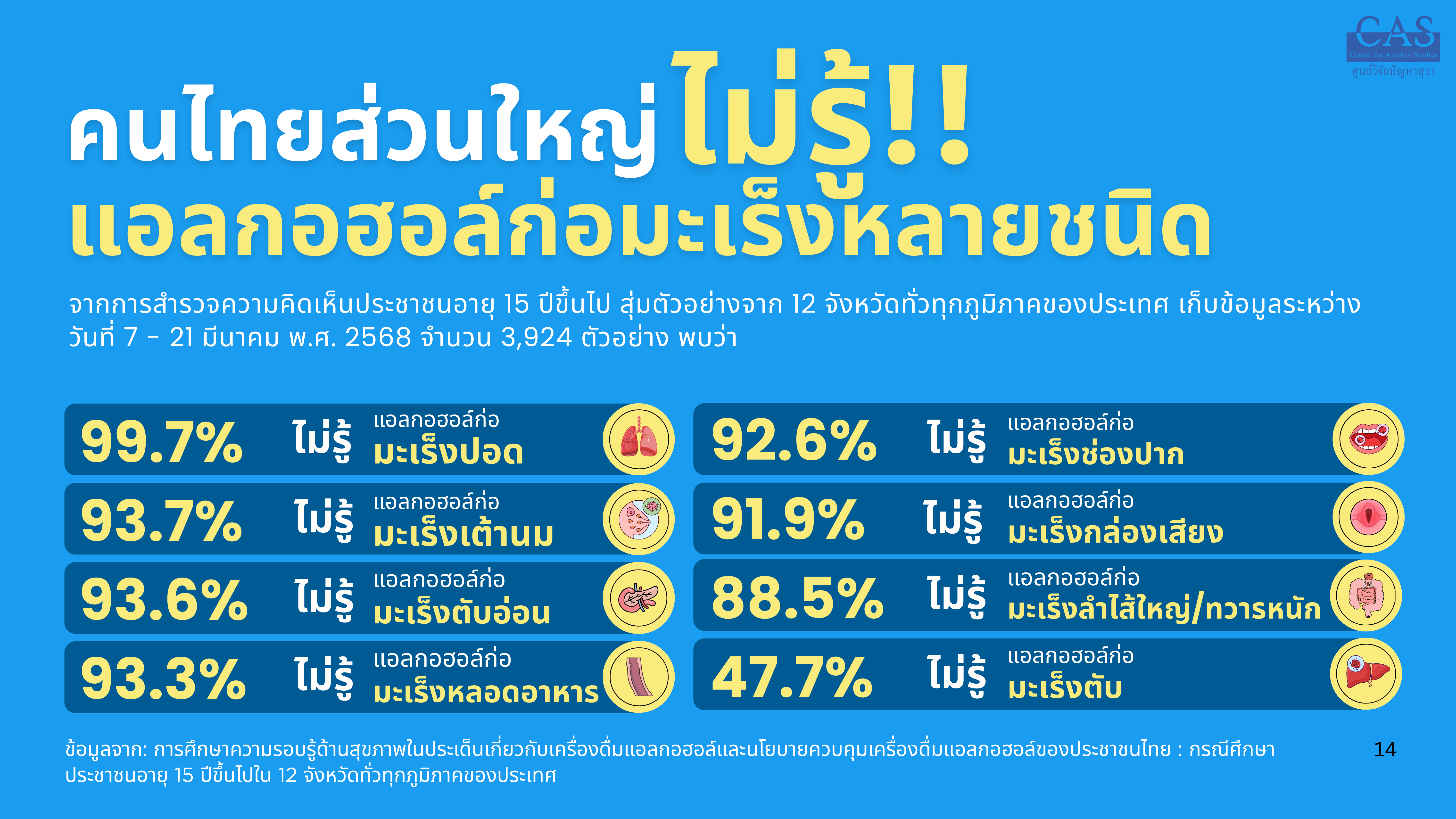
งานวิจัยนี้สำรวจความรอบรู้ด้านสุขภาพเกี่ยวกับเครื่องดื่มแอลกอฮอล์ พฤติกรรมการบริโภค ความคิดเห็นต่อนโยบายควบคุมเครื่องดื่มแอลกอฮอล์ และประสบการณ์จากการบังคับใช้กฎหมายของประชาชนไทยอายุ 15 ปีขึ้นไป โดยเก็บข้อมูลจากกลุ่มตัวอย่าง 3,924 คน ใน 12 จังหวัดทั่วประเทศ นอกจากนี้ยังศึกษาการบริโภคเครื่องดื่มแอลกอฮอล์นอกระบบภาษี เพื่อสะท้อนระดับความรู้ ความเข้าใจ และทัศนคติของประชาชนต่อผลกระทบจากการดื่มและมาตรการควบคุมเครื่องดื่มแอลกอฮอล์ อันเป็นข้อมูลสำคัญสำหรับการพัฒนานโยบาย การสื่อสารสาธารณะ และการส่งเสริมสุขภาพของประชาชนไทย


Health Literacy on Alcohol-Related Issues and Alcohol Control Policies among Thai People: A Case Study of Individuals Aged 15 Years and Older in 12 Provinces Across Thailand

This research examines health literacy related to alcoholic beverages, drinking behaviors, public attitudes toward alcohol control policies, and experiences with law enforcement among Thai people aged 15 years and older. The survey collected data from 3,924 respondents across 12 provinces representing all regions of Thailand. The study also investigates the consumption of untaxed and informal alcohol products to better understand public knowledge, perceptions, and attitudes regarding alcohol-related harms and regulatory measures. The findings provide valuable evidence for strengthening alcohol control policies, public communication strategies, and health promotion efforts in Thailand.

รายงานวิจัย โครงการสํารวจผลกระทบจากการบริโภคเครื่องดื่มแอลกอฮอล์ต่อบุคคลรอบข้าง (ภัยเหล้ามือสอง) : กรณีศึกษาประชาชนอายุ 15 ปีขึ้นไป ใน 12 จังหวัดทั่วทุกภูมิภาคของประเทศ
https://cas.or.th/content?id=1125
Tags : -

โครงการสำรวจผลกระทบจากการบริโภคเครื่องดื่มแอลกอฮอล์ต่อบุคคลรอบข้าง (ภัยเหล้ามือสอง): กรณีศึกษาประชาชนอายุ 15 ปีขึ้นไปใน 12 จังหวัดทั่วทุกภูมิภาคของประเทศ

งานวิจัยนี้ศึกษาผลกระทบจากการดื่มเครื่องดื่มแอลกอฮอล์ที่เกิดขึ้นกับบุคคลรอบข้าง หรือ “ภัยเหล้ามือสอง” ในประชาชนไทยอายุ 15 ปีขึ้นไป จำนวน 3,927 คน จาก 12 จังหวัดทั่วประเทศ โดยสำรวจทั้งผลกระทบที่เกิดขึ้นในครอบครัว ชุมชน สถานที่ทำงาน และต่อเด็ก รวมถึงการได้รับผลกระทบจากผู้ดื่มหนักและคนแปลกหน้าที่ดื่มแอลกอฮอล์ ผลการศึกษาเป็นข้อมูลสำคัญที่สะท้อนภาระทางสังคมและสุขภาพจากการดื่มของผู้อื่น เพื่อนำไปสู่การพัฒนานโยบายและมาตรการควบคุมเครื่องดื่มแอลกอฮอล์ที่มีประสิทธิภาพยิ่งขึ้นในประเทศไทย


Survey of Alcohol’s Harm to Others (AHTO): A Study of People Aged 15 Years and Older in 12 Provinces Across Thailand

This study examined the impacts of alcohol consumption on people other than the drinkers themselves, commonly referred to as “Alcohol’s Harm to Others (AHTO)” or secondhand alcohol harm. The survey included 3,927 respondents aged 15 years and older from 12 provinces across Thailand. It explored the effects of others’ drinking on families, communities, workplaces, and children, as well as harms associated with heavy drinkers and intoxicated strangers. The findings provide important evidence on the social and health burdens caused by alcohol use and can support the development of more effective alcohol control policies and public health interventions in Thailand.

รายงานวิจัย การศึกษาแนวโน้ม กลยุทธ์และวาทกรรมในการสื่อสาร การตลาดออนไลน์ของเครื่องดื่มแอลกอฮอล์
https://cas.or.th/content?id=1122
Tags : -

การศึกษาแนวโน้ม กลยุทธ์ และวาทกรรมในการสื่อสารการตลาดออนไลน์ของเครื่องดื่มแอลกอฮอล์


งานวิจัยนี้ศึกษารูปแบบ แนวโน้ม กลยุทธ์ และวาทกรรมที่ใช้ในการสื่อสารการตลาดออนไลน์ของเครื่องดื่มแอลกอฮอล์ในประเทศไทย โดยวิเคราะห์ข้อมูลจากสื่อสังคมออนไลน์และแพลตฟอร์มดิจิทัลต่าง ๆ เพื่อทำความเข้าใจวิธีการสร้างการรับรู้แบรนด์ การใช้ผู้มีอิทธิพลทางออนไลน์ (Influencers) การสื่อสารเชิงสัญลักษณ์ และการใช้ภาษาเพื่อส่งเสริมการบริโภคเครื่องดื่มแอลกอฮอล์ ผลการศึกษาช่วยสะท้อนพลวัตของการตลาดดิจิทัลและสนับสนุนการพัฒนานโยบายและมาตรการกำกับดูแลการสื่อสารการตลาดเครื่องดื่มแอลกอฮอล์ในยุคดิจิทัล


A Study of Trends, Strategies, and Discourses of Alcohol Online Marketing Communication


This research investigates the trends, strategies, and discourses used in online marketing communication for alcoholic beverages in Thailand. The study analyzes content from social media and digital platforms to understand how alcohol brands build awareness, utilize influencers, employ symbolic communication, and use language to shape consumer perceptions and behaviors. The findings provide insights into the evolving dynamics of digital alcohol marketing and contribute to the development of effective policies and regulatory measures for alcohol marketing communication in the digital age.

รายงานวิจัย การศึกษาผลกระทบของการบริโภคเครื่องดื่มแอลกอฮอล์ต่อการเจริญเติบโตทางเศรษฐกิจ
https://cas.or.th/content?id=1120
Tags : -

การศึกษาผลกระทบของการบริโภคเครื่องดื่มแอลกอฮอล์ต่อการเจริญเติบโตทางเศรษฐกิจ
(The Impact of Alcohol Consumption on Economic Growth in Thailand)

รายงานวิจัยฉบับนี้ศึกษาผลกระทบของการบริโภคเครื่องดื่มแอลกอฮอล์ต่อการเจริญเติบโตทางเศรษฐกิจของประเทศไทย โดยใช้ข้อมูลรายปีระหว่างปี ค.ศ. 1990–2019 และวิเคราะห์ทั้งการบริโภคในภาพรวมและจำแนกตามประเภท ได้แก่ เบียร์ สุรา และไวน์ ผลการศึกษาพบว่า การบริโภคเครื่องดื่มแอลกอฮอล์ โดยเฉพาะเบียร์และสุรา มีผลเชิงลบต่อการเติบโตทางเศรษฐกิจในระยะยาว สะท้อนถึงภาระทางเศรษฐกิจและสังคมที่เกิดจากการบริโภคเครื่องดื่มแอลกอฮอล์ และชี้ให้เห็นถึงความสำคัญของมาตรการควบคุมและส่งเสริมสุขภาพเพื่อการพัฒนาเศรษฐกิจอย่างยั่งยืน


Research Report: The Impact of Alcohol Consumption on Economic Growth in Thailand This research report examines the impact of alcohol consumption on Thailand’s economic growth using annual data from 1990–2019. The analysis covers overall alcohol consumption as well as specific beverage categories, including beer, spirits, and wine. The findings indicate that alcohol consumption, particularly beer and spirits, has a significant negative effect on long-term economic growth. The study highlights the substantial social and economic costs associated with alcohol consumption and emphasizes the importance of effective alcohol control measures and public health policies for sustainable economic development.

ศูนย์วิจัยปัญหาสุรา (ศวส.)

Centre for Alcohol Studies (CAS)

สาขาวิชาเวชศาสตร์ครอบครัวและเวชศาสตร์ป้องกัน อาคารศรีเวชวัฒน์ ชั้น 11 มหาวิทยาลัยสงขลานครินทร์ เลขที่ 15 ถนนกาญจนวนิช ตำบลคอหงส์ อำเภอหาดใหญ่ จังหวัดสงขลา 90110

083-5775533

https://www.facebook.com/cas.org.th

เข้าชมแล้ว 0 ครั้ง
Copyright © 2026 CAS All rights reserved.